Monday, October 27, 2008

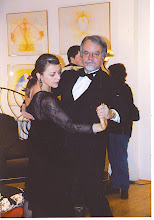
White Tie and Gowns

The was a time in which " White Tie " events dominate the high end nightlife scene of major urban US cities.

It was a time in which Nat King Cole was just starting, and Hollywood Musicals were starting their second very popular decade in which a new movie in the genre open every other week.

Do you wish something like that would come back?

The flowing gowns and wandering scents of perfumes.

Smoking lounges were the center of most stag discussions while the ladies enjoyed gossip in the powder rooms all manned by servants.

Just a little rememberance for those who still can not fully appreciate what this age was about.

Thursday, February 21, 2008

Betty Davis and Tyrone Power: Movie - Jezebel


Why she got this part and leading man Tyrone Power to work with.


Although Jezebel is often described as a sop to appease Davis after she didn't get Scarlett O'Hara, the Siren's research indicates this isn't the case. The play (produced in 1933, three years before Margaret Mitchell's novel was published) was purchased for Bette Davis by Warner Brothers in 1937, while David O. Selznick was still actively searching for a Scarlett and no decision had been made as to casting. Selznick saw Jezebel , no doubt accurately, as the Warners' way of cashing in on the anticipation surrounding Gone with the Wind and was furious. So in fact, according to GWTW historian William Pratt, Jezebel (which was released in March 1938, eight months before Selznick ever met Vivien Leigh) was the factor that put a period to any chance Davis had at the part. Davis herself always denied the "consolation prize" idea, but in her sunset years she loved to intimate she had come close to Scarlett. Alas, that isn't true either--she was never very high in the running. As early as 1937, when Selznick was working out distribution deals, he rejected an offer from Warner Brothers that was contingent on casting Errol Flynn and Bette Davis and told friends that he would cast Katharine Hepburn as Scarlett before he would consider Davis.

Monday, February 18, 2008

Ballroom Dance Classes Ithaca

Ballroom Dance Classes Ithaca


Tuesday, January 29, 2008

Ballroom Theatre Arts Photo


Friday, December 7, 2007

Ginger Rodgers and Fred Astaire Photo


This was too beautiful to not include on this blog.

Wanted Ballroom Dance Partner

Wanted Ballroom Dance Partner.
Dance competitions are developed to match the personal skills and measure the dance development of each couple competing with other simiarly ranked couples. It is here where each of us learn more about ourselves, as well as our fellow teachers.

In truth it is a real test in personal character. And thats the heart of it.

What everyone has immediately became aware during their first experience at a dance competition is the excellence of the people who are involved. The social and cultural atmosphere is very much like dance heaven, and those of us who have experienced this a number of times are hooked. For some very good reasons too.

It is here, in the test of competing with others, and cognition what you are competing in, Ballroom Dance , that the true issue of " how you are measured " to prevailing dance standards you are being judged by. And it is here where the preparation, sociocultural perceptions, and time invested clearly comes to full view of your, our, fellow dancers.

Thus the quality of the people themselves and the sociocultural atmosphere they, we, produce is what most of us have been looking for since the age of 8. A dream world of goodness and futuristic happiness.This is what is being offered.Email:

salsadanza@aol.com

607 - 451 - 8663

Monday, February 26, 2007

Ballroom Dance Classes


The social scene through - out the United States, Canada, Europe, Tokyo, India, Lebanon, and Australia is a buzz over Social Ballroom Dances. Dance teachers are appearing litterally out of the wood-work, and poeople wallets are opening up and really paying out.


Yet there is no real compass by either the consumer of this growth teaching services, or within the social dance entertainment services on what are the clear differences between amateur and profession side of not only Ballroom Dance Socials, but more importantly Ballroom Dance Instruction. There are clear demarcations lines between amateur and professional.


One: This revolves around the singularity that dance socials are the primary ownership of the amateur social dancers. Here social dancers, which is what an amateur dancer really is, collectively pull together a society under the goverance of non- for - profit organization model; this assures their membership security from emotional and political exploitation from the hustlers who opperates at the outer edges of the dance world - often looking for weakness in which penitrate their various rip-off schemes. This is the protective barrier, and one in which allows the dance teaching professional to train clients to assume ownership over social dance with increase success in the growth of this form of pleasurable activity-on the behave of the amateur social dancers alone.


Two: This frees up alot of quality time in which the dance teaching profssional can persue higher dance standards within the pedagogy offerings - representing their applied school dynamics, and for themelves updating their own dance performance and teaching skills. This element demands essentially several hours per week in order to accomblish. Dance teaching professionals are themselves liklewise protected by amateurs looking for freebies from instructors - who in most cases really can not afford doing this.


In a healthy dance social and cultural environment withineither large and small communities, these role functions did not appear overnight, nor were they thought up irrespective of motives, or sociopolitical issue, but were the " High Teaching Dance Standards " authored and applied by his namesake, Arthur Murray Dance Studios Incorporated. There is little doubth of this perscribed installation of the differences, once an applied, then to being successful which created in the end, The American Social Dance Culture.


It is the preservation of the American Social Dance Culture in which these standard are directed as the means - to secure the rightful ownership in the hands of the market place of the amateur social dancers, rather than cheap emotional and at times hustling - strategies of instructors's attempts making clients dependent upon the instructor for assurances.


Thus this clearly states the objective of this blog. There are now too many rip - off artists, and the market is being wasted as a result.


Mr. Roger M. Christian